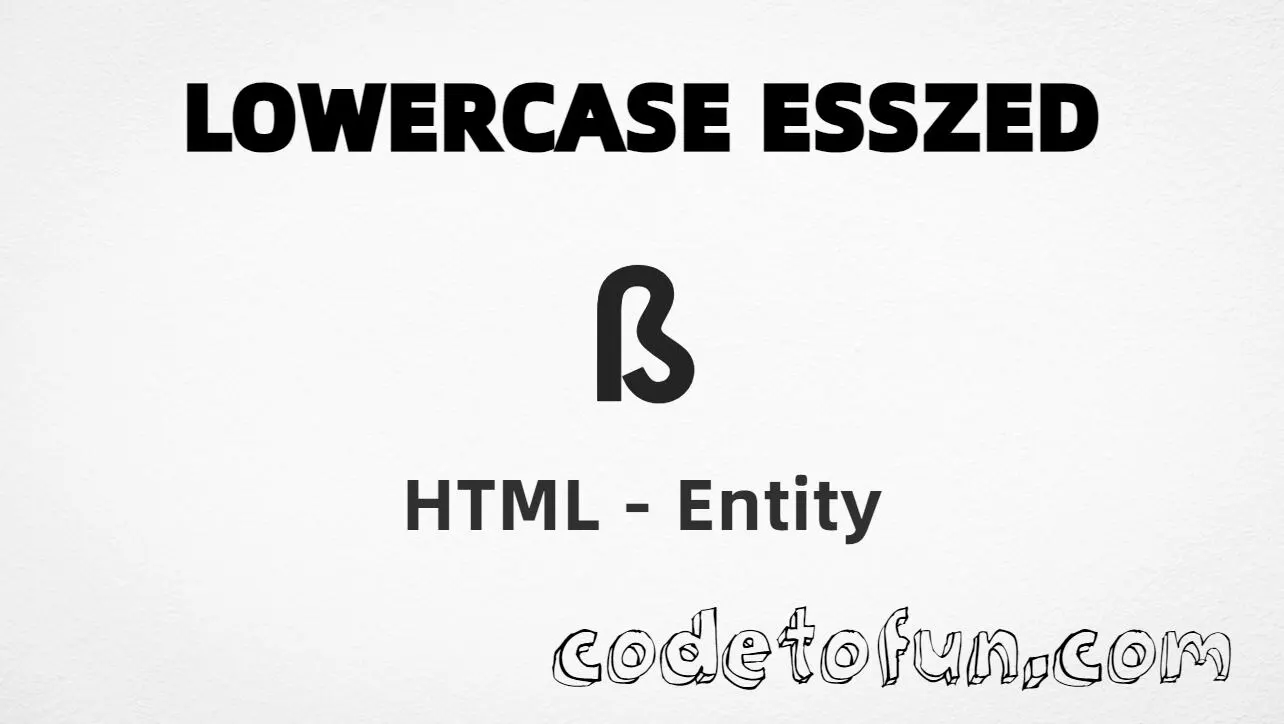
Lowercase esszed (ß) is the Latin-1 Supplement character at Unicode U+00DF (LATIN SMALL LETTER SHARP S). Also called eszett or sharp s, it is used in German for a special s sound (as in Straße, groß).
Remember
Character     ß
Unicode       U+00DF
Named entity  ß
Hex entity    ß
Decimal       ß
CSS escape    \00DF
All-caps      usually SS (or ẞ U+1E9E)
Named, hex, decimal, CSS, and a typed character all produce the same glyph: ß. Prefer ß in HTML source for clarity.
Reference
Quick Reference
One table for every form you will actually use.
Form
Code
Where it goes
Named entity
ß
HTML markup (best default)
Hex entity
ß
HTML markup
Decimal entity
ß
HTML markup
CSS escape
\00DF
Stylesheet content
Direct character
ß
UTF-8 HTML text
When to Use Which
Situation
Use
Readable HTML source
ß
Numeric entity required
ß or ß
Generated text via ::before / ::after
content: "\00DF"
All-caps German text
Usually SS (or capital ẞ U+1E9E)
Greek beta instead
β (β) — different character
See it
Live Preview
Lowercase esszed in German and comparison contexts.
German sampleStraße, groß, Fuß
Large glyphß
Named entityß → ß
vs ss / β / Bß | ss | β | B
With entitiesNamed: ß | Hex: ß | Decimal: ß
Code
Complete HTML Example
One page that shows this character with named, hex, decimal, and CSS forms. Use View Output or open the live editor.
Use ß (named), ß (hex), ß (decimal), or the CSS escape \00DF in the content property. All render ß. Prefer ß in HTML source.
U+00DF (LATIN SMALL LETTER SHARP S). Hex DF, decimal 223. It belongs to Latin-1 Supplement (U+0080–U+00FF).
Yes. ß is the HTML5 named entity for ß (eszett / sharp s).
Use it for German words and names that need the sharp s (Straße, groß, Fuß), language lessons, and multilingual pages with German text.
HTML entities (ß, ß, or ß) go in markup. The CSS escape \00DF is used in stylesheets (usually in the content property of ::before/::after). Both render ß.
No. Typing ss is two characters. Greek beta β is U+03B2 (β). Capital sharp S ẞ is U+1E9E. In many all-caps contexts German still uses SS instead of ẞ.
🤔
Did you know?
Lowercase esszed (eszett) is Unicode U+00DF (decimal 223) — LATIN SMALL LETTER SHARP S in Latin-1 Supplement. HTML5 provides ß — the most readable form. In all-caps German text it usually becomes SS; Unicode also defines capital ẞ (U+1E9E, no common named entity). Not the same as Greek beta (β) or two plain s letters.