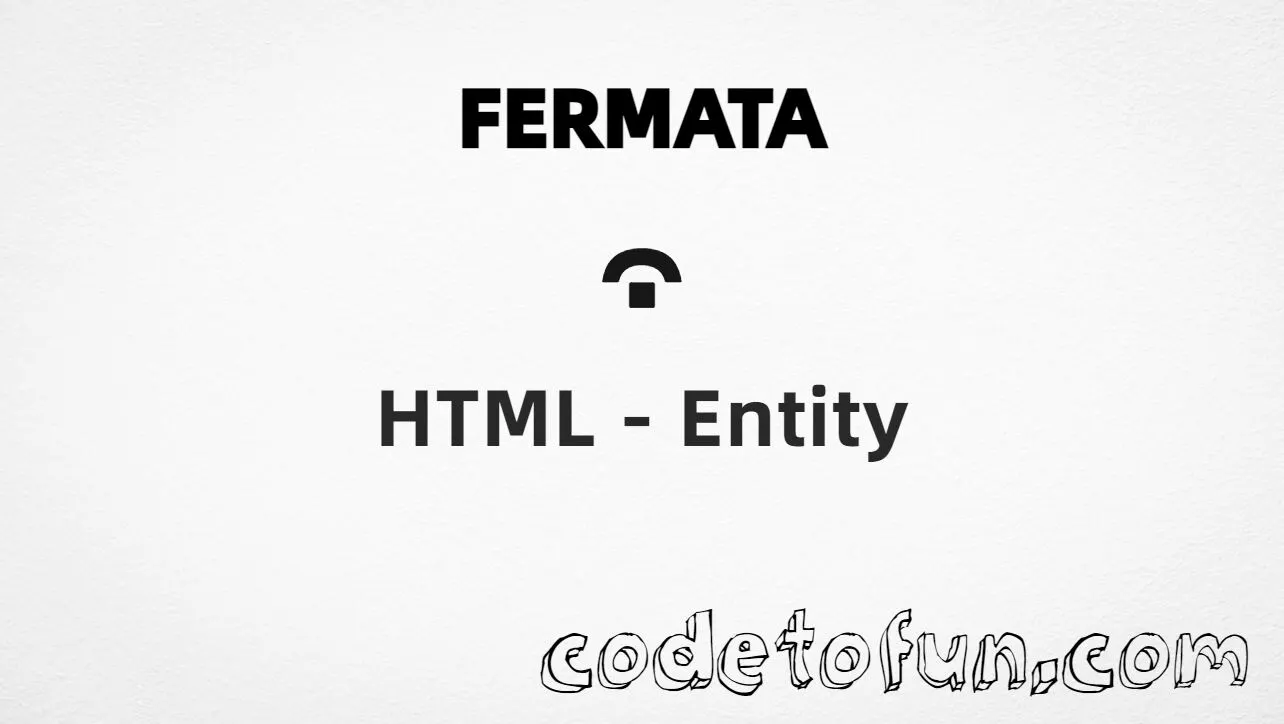
Combining fermata is the Unicode character at U+0352 in Combining Diacritical Marks. Official name: COMBINING FERMATA. It is a combining mark that attaches to the previous base letter — for example a͒ → a͒.
Remember
Mark          (combining ͒)
Unicode       U+0352
Hex entity    ͒
Decimal       ͒
CSS escape    \0352
Named entity  (none)
Not the same  U+1D110 (musical fermata) · breve · macron
Prefer ͒ or ͒after a base character (no named form). Alone, the mark may look empty or broken.
Reference
Quick Reference
One table for every form you will actually use.
Form
Code
Where it goes
Named entity
None
—
Hex entity
͒
After a base letter in HTML
Decimal entity
͒
After a base letter in HTML
With dotted circle
◌͒
Show the mark alone (◌͒)
CSS escape
\0352
Stylesheet content (after a letter)
When to Use Which
Situation
Use
Fermata mark on a letter / placeholder
Base + ͒ (e.g. a͒)
Display the mark by itself
Dotted circle + mark: ◌͒
Full musical notation / sheet music
Music font, SVG, or Musical Symbols (U+1D110) — not U+0352 alone
Built with Hex: a͒
Built with Decimal: a͒
Built with CSS: a͒
Dotted circle: ◌͒
Sample: note a͒
How It Works
1. Hex: write a base letter, then ͒. The mark combines → a͒.
2. Decimal: same mark as 850 → a͒. Same visual as hex.
3. CSS: put the base letter and \0352 together in content (e.g. "a\0352"). Combining alone in content has nothing to attach to.
4. Dotted circle:◌ + ͒ shows the mark without a real letter (◌͒).
Pitfalls & Tips
Common mistakes when working with Combining Fermata.
Order
Base letter first
Always write the base character before the mark: a͒, not ͒a.
Name
No named entity
There is no HTML5 named entity for U+0352. Use ͒ or ͒. Do not invent &fermata;.
Music
Not Musical Symbols fermata
U+1D110 (MUSICAL SYMBOL FERMATA) is a different character in the Musical Symbols block. U+0352 is a combining diacritic for text.
Font
Font coverage
Combining Diacritical Marks rendering varies by font. Prefer fonts with good combining support, or use SVG for critical music UI.
CSS vs HTML
Do not mix escapes
\0352 belongs in CSS strings (with a base letter). ͒ / ͒ belong in HTML after a base character.
a11y
Add accessible text
Screen readers may ignore or misread combining marks. Prefer nearby prose (for example “fermata”) when the mark carries meaning.
Semicolon
End references
Always finish entities with ; — write ͒, not ͒.
Compatibility
Browser Support
Combining fermata (U+0352) and its entity forms (͒, ͒, CSS \\0352) are supported in all mainstream browsers. Visible stacking depends on Combining Diacritical Marks font support.
✓ Universal support
Combining Fermata (U+0352)
Encode with hex or decimal after a base letter, or CSS escape with a letter in content — same code point everywhere encoding is supported.
100%Browser coverage
Google ChromeSupported
Yes
Microsoft EdgeSupported
Yes
Mozilla FirefoxSupported
Yes
Apple SafariSupported
Yes
OperaSupported
Yes
Internet ExplorerAll versions
Yes
U+0352Full support
Bottom line: Prefer base + ͒ in HTML (no named form). Use ͒ when decimal form is required, and \\0352 only inside CSS content with a base letter.
Remember
Key Takeaways
Unicode: combining fermata is U+0352 (decimal 850) — attaches to the previous letter.
HTML: no named entity — use base + ͒ / ͒.
CSS: use a letter + \0352 inside content (e.g. "a\0352").
One line:U+0352 → base + ͒ / ͒ / CSS "a\0352" (no named form).
Frequently Asked Questions
Write a base letter, then ͒ (hex) or ͒ (decimal), or use CSS \0352 after a letter in content. There is no named HTML entity. Example: a͒.
U+0352 (COMBINING FERMATA). Hex 0352, decimal 850. It belongs to the Combining Diacritical Marks block (U+0300–U+036F).
No. HTML5 does not define a named entity for U+0352. Prefer ͒ or ͒ after a base character.
Use it when you need a combining fermata mark on a letter or placeholder in text. For full sheet-music notation, prefer dedicated music fonts/SVG or Musical Symbols characters such as U+1D110 — not this combining mark alone.
HTML numeric entities (͒ or ͒) go in markup after a base character. The CSS escape \0352 goes in stylesheet strings (usually content), typically after a base letter in the same string.
Combining marks attach to the previous character. Alone they may render poorly or seem empty. Always place a base letter (or dotted circle ◌) before ͒.
🤔
Did you know?
Combining fermata is Unicode U+0352 (decimal 850) in Combining Diacritical Marks. There is no HTML5 named entity; use ͒ or ͒after a base letter (for example a͒ → a͒). It is not the same as Musical Symbols fermata (U+1D110). Do not confuse it with breve, macron, or combining diaeresis.